

Introduction to the Role of AI in the Workplace
AI has gone from being a future concept to a reality in modern workplaces. Tech leaders expect AI to be in US workplaces by 2028. Using AI in the workplace is changing how work gets done, making workflows more efficient and setting the stage for a jump in employee satisfaction and productivity.
Beyond just workflows, AI adoption is changing the organization itself. It’s moving the focus from manual, mundane tasks to strategic, creative, and collaborative work. This means a more agile and engaged workforce as employees are no longer bogged down by admin tasks.
This is all being led by a new class of technology: AI Agents. These agents, which form the backbone of advanced platforms like Aisera, are different from simple automation tools. They are intelligent, goal-oriented systems that operate autonomously, executing complex, multi-step tasks across multiple platforms, from processing a PTO request in a Human Resources Information System (HRIS) to resolving a complex IT ticket.
By deploying these AI Agents, the shift from mundane tasks to strategic work becomes not just possible but guaranteed, and the workforce is truly free to do high-value work. In this article, we want to explore use cases and the benefits of leveraging AI in workplaces.
Key AI Use Cases in the Workplace
1. Enhancing HR Support with Generative AI
Instant and Personalized Employee Support
AI transforms HR support by providing employees with instant, personalized assistance for their inquiries. Leveraging large language models (LLMs) tailored to HR and industry specifics, AI solutions like AiseraGPT facilitate ChatGPT-like interactions that are natural and intuitive. These top AI automation tools ensure employees receive the support they need, precisely when they need it, fostering a supportive and responsive HR environment.
Streamlined HR Processes
Integrating agentic AI into HR processes significantly reduces the time, cost, and effort associated with completing HR formalities. By automating routine tasks and providing seamless integration with existing HR systems, such as Workday and ADP, AI enables a more efficient and cost-effective HR operation. Both employees and HR professionals benefit from accurate, real-time responses to their requests, enhancing their overall experience and job satisfaction.
2. AI-Driven Employee Onboarding and Offboarding
Automated Onboarding Experiences
AI revolutionizes the way organizations manage employee onboarding and offboarding, making these processes seamless and hassle-free. By automating and connecting multi-step, cross-functional processes, AI ensures a smooth transition for employees. This automation extends to all aspects of the onboarding experience, from initial paperwork to setting up necessary accesses, significantly enhancing the efficiency of HR departments.
Personalized Offboarding Procedures
Similarly, AI streamlines the offboarding process, ensuring that it is conducted with the same level of care and efficiency as onboarding. AI-powered platforms can manage exit interviews, revoke access permissions, and handle other offboarding formalities, making the process more manageable for HR teams and more pleasant for departing employees.
3. Optimizing PTO Management
Efficient Leave Management
AI significantly improves the process of managing paid time off (PTO) by enabling employees to easily request, track, and receive approvals for leave. This not only simplifies the PTO management process for both employees and managers but also enhances overall organizational efficiency by ensuring a smooth workflow and reducing administrative burdens.
Proactive Leave Planning
Through AI, organizations can better plan for employee absences, ensuring minimal disruption to business operations. AI analytics can help predict peak times for leave requests and enable proactive staffing adjustments, ensuring business continuity and maintaining productivity levels.
4. AI Search for Workplace
Revolutionizing Information Retrieval
Enterprise Search in the workplace, such as Aisera’s AI Enterprise Search, revolutionizes the way employees access and interact with company information. By understanding queries in natural language and creating a personalized knowledge graph, AI Search delivers precise, relevant, and trusted search results. This ensures employees can find the information they need quickly and efficiently, from policies and documents to data across all repositories, enhancing productivity and decision-making.
Personalized and Secure Search Experience
Beyond merely retrieving information, AI Search personalizes the search experience for each employee based on their interactions, preferences, and profile, ensuring the most relevant results are always at their fingertips. Moreover, with strict adherence to security protocols and permissions-aware results, AI Search guarantees that sensitive information remains protected, offering a trusted and secure solution for enterprise-wide knowledge discovery and access. This capability not only saves time but also fosters a culture of self-service and autonomy among employees, further elevating the workplace experience.
5. Streamlining Workspace Management
Automating Workspace Requests
AI service desks automate and simplify tasks related to workspace management, such as maintenance requests, badge requests, and even employee workspace onboarding. By automating these workflows, AI reduces operational costs and improves the efficiency of workspace management teams, delivering exceptional service to employees.
Centralizing Maintenance and Workspace Requests
AI facilitates a centralized hub for submitting and tracking maintenance and workspace requests, enabling employees to use their preferred collaboration tools for various needs. This centralization promotes efficiency and improves the overall employee experience by making it easier to manage and resolve workspace-related tasks.
6. Proactive Notifications and Reminders
Automated Notifications for Employee Engagement
AI enhances employee engagement by sending automated notifications and reminders about important events, such as learning and development sessions, training deadlines, and performance reviews. These proactive communications ensure employees are well-informed and can participate fully in organizational initiatives, fostering a culture of continuous learning and development.
Streamlining Information Distribution
By broadcasting important company-wide information, such as office policy updates and maintenance schedules, AI ensures that employees stay informed about relevant updates and changes. This proactive approach to communication helps to create a more transparent and informed workplace environment, enhancing trust and collaboration among employees.
7. Leveraging AI for the Service Desk
Transforming IT Support with AI
Leveraging Agentic AI in IT significantly transforms the IT support landscape by introducing automated, intelligent service desks. These AI-powered service desks handle inquiries and requests in real-time, providing instant, accurate responses to employees.
By using human intelligence and leveraging natural language processing and understanding, Aisera’s AI Service Desk offers human-like interactions, allowing for the automation of routine inquiries and the resolution of common issues without human intervention. This transformation leads to a dramatic improvement in resolution times, enhancing employee productivity and overall workplace efficiency.
Enhancing Omnichannel Support Experience
AI service desks are designed to deliver a seamless omnichannel experience, ensuring employees receive consistent and efficient support across all digital channels, including email, chat, voice, and collaboration platforms like Microsoft Teams and Slack. This approach not only improves the accessibility of IT support but also caters to the diverse preferences of the modern workforce.
Furthermore, by enabling self-service options and facilitating micro-actions within the search portal, AI service desks empower employees to resolve and perform tasks with unprecedented ease and speed, significantly boosting user satisfaction and productivity.
Benefits of Artificial Intelligence in the Workplace
AI in the workplace has a big impact on the employee experience, making it more fun and satisfying. AI for employee experience gives you personalized feedback and development opportunities to hone your skills and grow professionally. Moreover, leveraging Generative AI in HR can streamline recruitment, onboarding, and employee feedback processes, making them more responsive and tailored to individual needs.
This personalized approach creates a positive work environment and employee experience and ultimately retention. The benefit of a personalized employee experience goes beyond engagement and retention.
For example, AI-driven platforms can give you personalized feedback and development opportunities by analyzing your performance data and suggesting relevant training modules or career paths. This proactive approach to growth means you’re not only productive but also continuously developing your skills, so you’re a more competent and motivated workforce. By giving you that tailored support, AI creates a work environment where growth is a core value, which in turn contributes to the overall success of the company.
In particular, the integration of platforms like Enterprise AI Search is a good example of the transformative impact on the workplace. This sophisticated search solution revolutionizes how employees interact with and access information, responding to queries with unparalleled precision, personalization, and trustworthiness.
By harnessing the power of AI to understand natural language queries and draw from an extensive, up-to-date knowledge graph, it ensures that employees can effortlessly find specific information across the company, thus significantly saving time and enhancing productivity.
Transforming Complex Data into Actionable Insights
AI excels in analyzing complex datasets to extract actionable insights, thereby empowering decision-makers to craft informed strategies. By leveraging AI for analysis, companies can identify trends, predict market movements, and understand customer queries and behavior with unprecedented accuracy.
This capability not only sharpens competitive edge but also enhances responsiveness to market dynamics, ensuring businesses remain agile and well-informed in their strategic planning.
Leveraging Machine Learning for Enhancing Data and Information Security
AI technologies play a crucial role in bolstering data and information security. Through advanced algorithms and machine learning, AI systems can detect and neutralize cyber threats in real time, safeguarding sensitive information from unauthorized access.
Additionally, AI platforms with the TRAPS framework and security protocols adapt and evolve to counter new threats, providing a robust defense mechanism that ensures data integrity and builds trust among stakeholders.
Embracing Cost Reduction and Creating New Job Positions
AI’s operational efficiencies translate into significant cost savings for businesses. Automated processes reduce the need for manual labor in repetitive tasks, allowing organizations to allocate resources more effectively.
Simultaneously, the advent of AI opens up new job positions, especially for humans, in AI management, development, and oversight, fostering an ecosystem where technology and human expertise coexist to drive innovation and growth.
Achieving Bias-Free Decisions and Ensuring Compliance
When AI systems are designed and implemented properly for workplaces, they can help achieve bias-free decisions by analyzing data objectively, without the unconscious biases inherent in human judgment.
This impartiality is invaluable in hiring practices, performance evaluations, talent management, and customer service, ensuring fairness and equality. Additionally, AI can monitor regulatory compliance across operations, reducing the risk of costly legal violations and reinforcing ethical standards.
Fostering Inclusive Workplaces and Mitigating Risks
AI contributes to creating more inclusive workplaces by facilitating accessibility and personalized support for employees with diverse needs. AI tools can adapt workplace environments to suit individual preferences and requirements, promoting a culture of inclusivity.
Moreover, AI’s predictive analytics play a pivotal role in risk mitigation, identifying potential issues before they escalate and enabling proactive management strategies that safeguard the organization’s interests and its workforce.
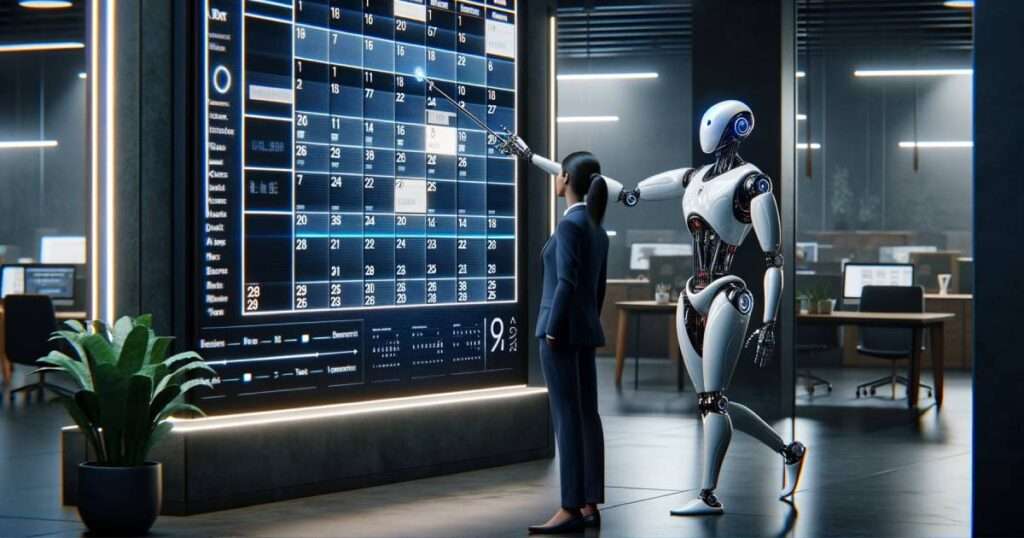
AI Agents for Business: Your Road to Hyper-Efficiency
The general application of AI is giving way to a more advanced, autonomous solution: AI Agents for business. An AI Agent is a specialized, intelligent system that can perform a set of tasks, make decisions, and interact with other systems autonomously within defined business boundaries. Unlike simple chatbots that rely on pre-programmed scripts, a true AI Agent uses advanced Agentic AI, a key concept in solutions like Aisera, to understand complex natural language, plan multi-step actions, and integrate across platforms like Workday, SAP, and your core IT systems.
These agents are the evolution of enterprise automation, acting as tireless, highly accurate digital employees. For business, this means moving beyond task automation to deploying a full digital workforce that drives hyper-efficiency across IT Service Management, HR Support, and internal knowledge access. By deploying AI Agents, you’re not just saving costs, you’re strategically elevating the employee experience and creating a more agile, productive, and future-proof organization.
Challenges of Using AI in the Workplace
As artificial intelligence becomes increasingly embedded in workplace operations, it brings not only transformative benefits but also a set of challenges and concerns. These issues require careful consideration and management to fully leverage AI’s potential while mitigating its downsides. Here’s a closer look at some of the critical challenges of using AI in the workplace:
Privacy and Security Risks: Implementing AI systems raises concerns about the safeguarding of sensitive employee data and proprietary information, potentially increasing vulnerability to cyber threats.
Skill Gaps and Job Displacement: The rapid integration of AI can impact the labor market and lead to skill gaps among the workforce and fears of job displacement, particularly in roles susceptible to automation.
Bias and Fairness: AI algorithms can inadvertently perpetuate bias, affecting decisions in AI recruiting, performance evaluations, and promotions if not carefully monitored and corrected.
High Implementation Costs: Initial costs for integrating AI technologies can be substantial, including expenses related to software development, training, and ongoing maintenance.
Resistance to Change: Employees and management may exhibit resistance to adopting AI solutions, driven by fears of the unknown and discomfort with changing traditional operational methods.
The Innovative Future of AI in Workplace
The future of AI in the workplace is poised for groundbreaking innovation, promising a paradigm shift in how businesses operate and employees engage with their work. As AI technologies evolve, we anticipate a landscape where AI-driven insights and automation capabilities will catalyze unprecedented levels of productivity and creativity.
Future applications may include AI-enhanced decision-making processes, immersive training and onboarding environments through virtual reality, and even more sophisticated AI copilots tailored to individual worker needs. This forward momentum will not only streamline operations but also cultivate talent for a more dynamic, adaptable, and empowered workforce.
The integration of AI stands to redefine professional development, operational efficiency, and the very essence of workplace collaboration, heralding a new era of digital transformation and strategic prowess.
Creating an AI Implementation Roadmap for the Workplace
Creating an AI Implementation Roadmap for the Workplace is essential for harnessing the full potential of AI technologies while aligning with organizational goals and addressing potential challenges. A strategic approach ensures that AI solutions like AI for HR solutions, Enterprise AI Copilot, and AI Search are integrated effectively to enhance the employee experience and operational efficiency. Here’s how to craft a roadmap that reflects our products’ strengths and aligns with your company’s vision:
Assess and Define AI Objectives: Start by identifying key areas within your organization where AI can deliver the most value, whether it’s improving HR processes, enhancing employee experiences, or streamlining information access. Prioritize objectives based on impact and feasibility.
Pilot with Generative AI for HR: Experimenting with Generative AI for HR can transform how you support and engage with your employees. This technology offers a personalized, responsive HR service, setting a high benchmark for employee satisfaction. Get started with Generative AI to see immediate improvements in HR-related inquiries and processes.
Leverage Automation for Human Resources: Implement Automation for Human Resources to streamline routine HR tasks like onboarding, offboarding, and benefits management. This step reduces manual workload, allowing your HR team to focus on strategic initiatives and employee engagement.
Deploy AI Copilot Across Departments: Integrate AI Copilot to act as a virtual assistant for employees, offering proactive support and enhancing productivity across various functions. By providing a unified interface for all user requests, AI Copilot ensures a seamless, efficient, and more connected employee experience.
Enhance Accessibility with AI Search: AI Search transforms how employees find and utilize information, making knowledge discovery effortless and personalized. By leveraging Search as a Service organizations can harness cloud-based, AI-powered search platforms that further refine the efficiency and precision of finding relevant company data and documents.
This service model enhances the capability of AI Search by providing scalable, customizable, and intelligent search solutions that cater specifically to the vast and varied information landscapes of enterprises. Implementing “Search as a Service” addresses the critical need for quick, accurate access to a wide range of company data and documents, significantly boosting decision-making and productivity.
Evaluate and Scale: Continuously monitor the performance and impact of AI implementations. Gather feedback from users and use these insights to refine and expand AI integration across the workplace.
By following this roadmap and leveraging our suite of AI products, organizations can navigate the complexities of AI implementation with confidence. Embracing AI not only propels your business forward but also creates a more engaging, efficient, and innovative workplace.
Conclusion
In conclusion, integrating AI for any use in the workplace presents a transformative opportunity to enhance efficiency, employee satisfaction, and innovation. By carefully crafting an AI implementation roadmap and leveraging advanced solutions like Generative AI for HR and AI Copilot, businesses can navigate the challenges and maximize the benefits of AI.
To experience the transformative power of AI in action and explore how it can revolutionize your workplace, you can book an AI Demo today!