

AI Agents vs. AI Assistants: Key Differences & Business Applications
What’s the real difference between an AI Agent vs. AI Assistant? Think of the difference as passive vs. proactive. AI assistants are reactive tools. They wait for you to prompt them, executing specific tasks one by one. They function like a smart typewriter: highly capable, but they stop working the moment you stop typing.
AI agents, on the other hand, are the “real deal” in enterprise automation. They are autonomous systems capable of decision-making, planning, and executing complex workflows on their own. Unlike an assistant, an agent doesn’t need you to guide it through every step – it pursues user-defined goals with minimal human intervention.
For business leaders, this is a massive shift. It moves us beyond simply automating administrative tasks (like drafting emails) to deploying intelligent systems that manage end-to-end operations.
Key Takeaways
- Trigger Mechanism: AI assistants work by waiting for user prompts (“Draft a policy update”); AI agents work by pursuing specific objectives (“Ensure all new hires complete onboarding by Day 1”).
- Scope: Assistants handle the day-to-day routine tasks. Agents take on the heavy lifting of multi-step processes that span across different software tools.
- Autonomy: Assistants require constant user input to function; Agents operate independently within defined guardrails.
- Impact: An AI assistant answers a single question. An agentic AI system proactively detects an issue, updates records across the enterprise, and resolves the problem before you even know it exists.
AI Agents vs. AI Assistants: At a Glance
To get a better feel for how these AI tools compare, take a look at how they stack up in terms of decision-making, memory, and execution capabilities.
| Feature | AI Assistant | AI Agent (Agentic AI) |
| Primary Function | Reactive: Waits for natural language commands. | Proactive: Works toward user defined goals autonomously. |
| Interaction | Direct interaction (Chat-based). | Operational (Action-based). |
| Memory | Contextual only within the active session. | Persistent memory; learns from past interactions. |
| Tool Use | Can retrieve info or perform 1-step actions. | Chains AI tools together to solve problems. |
| Human Role | The Human is the “Pilot” (constant user input). | The Human is the “Supervisor” (Human-on-the-loop). |
| HR Example | “Write a job description for a Sales role.” | “Find the top 5 Sales candidates on LinkedIn and email them.” |
What are an AI assistants?
An AI assistant is an interface designed to assist users in completing specific tasks more efficiently. Think of an AI assistant as a highly skilled intern who sits at a computer, waiting for you to tell them exactly what to do next.
Most professionals are familiar with AI assistants through Large Language Models (LLMs) like ChatGPT, Google Assistant, or enterprise AI chatbot examples. They excel at Natural Language Processing (NLU) – interpreting a user query and fetching a relevant answer or performing a distinct action.
Core Characteristics of AI Assistants
- Prompt-Dependent: They function as an interface between the user input and the system. Unlike autonomous systems, if you stop asking questions, the AI assistant stops working.
- Task-Level Automation: They are excellent at repetitive tasks such as drafting content, scheduling meetings, setting reminders, and answering questions.
- Limited Scope: They generally do not “plan.” If you ask an assistant to “Fix the payroll error,” it will ask you how; it won’t investigate the root cause unless specifically guided through every step by user direction.
Best for: Reducing friction in routine tasks, such as answering policy questions or controlling smart devices.
What are AI agents?
AI agents are system-level construct that uses AI models as a “brain” to reason, plan, and execute actions. Unlike AI assistants, an AI agent does not need to be told how to do something; it only needs to be told what result is required.
AI agents work by operating using Agentic Workflows. When given a goal, the AI agent breaks it down into sub-tasks, selects the right AI tools (email, CRM, HRIS, web browser), executes the steps, and critiques its own workflow to ensure the goal is met.
Core Characteristics of AI Agents
- Goal-Oriented Execution: AI agents operate based on objectives, policies, and guardrails rather than rigid predefined rules.
- Multi-Step Reasoning: They utilize “Chain of Thought” processing to determine the sequence of actions required to perform tasks.
- Tool Use & Integration: Agents have “arms and legs” – they can write to databases, send Slack messages, and update spreadsheets via APIs without human intervention.
- State Management: Agents maintain a memory of the workflow. If a step fails (e.g., a candidate’s email bounces), the AI agent can reason a new path (e.g., try finding their phone number) without asking the human for help.
Best for: Complex workflows and complex operations where outcomes matter more than interaction, such as automated talent sourcing, onboarding orchestration, or data analysis for marketing teams.
AI Agents vs. AI Assistants: A Deep Dive Comparison
While AI agents and AI assistants both utilize AI technology and machine learning, they serve fundamentally different roles in the enterprise. AI assistants are designed to assist users with day-to-day productivity, whereas AI agents are designed to execute system-level operations.
The 4 Critical Differences
For organizations looking to deploy AI solutions, understanding these four distinctions is vital for effective implementation.
1. Autonomy and Proactiveness
Assistants wait – agents initiate. One of the clearest dividing lines is how independently the systems operate.
- AI Agents (Proactive): AI agents are conditionally autonomous. Once an enterprise sets a goal, the agent operates within guardrails to plan and execute multi step processes. As proactive systems, they can flag anomalies (like a sudden drop in employee engagement) and initiate a resolution workflow without waiting for user prompts.
- AI Assistants (Reactive): AI assistants work strictly on demand. They depend on constant user input – responding only when directed. While they are excellent at automating administrative tasks like scheduling, they lack the capacity for independent workflow orchestration.
2. Decision-Making vs. Task Execution
Assistants follow rules – agents evaluate options.
- AI Agents: Go beyond simple execution to perform operational decision-making. They evaluate alternatives in real time, assess likely outcomes, and select actions aligned with policy. This enables them to optimize processes end-to-end, such as rerouting a supply chain shipment based on weather data, functioning as intelligent systems.
- AI Assistants: Primarily execute predefined tasks based on pre defined rules. Their scope is narrow; they support human decision-making by retrieving data or drafting text, but they do not independently decide what to do next without user direction.
3. Learning and Adaptation
Assistants remember preferences – agents improve systems.
- AI Agents: Operate as adaptive systems. AI agents learn from operational data and outcomes. In enterprise environments, this often involves techniques like reinforcement learning or supervised learning to refine behavior. Over time, an agent becomes more efficient at resolving customer service queries or identifying fraud, effectively “up-skilling” itself.
- AI Assistants: Have a narrower adaptation scope. Their “learning” is typically limited to remembering user preferences or maintaining natural language context within a chat session. Significant improvements usually require developer updates to the underlying Large Language Models (LLMs).
4. Scope & Complexity of Work
Assistants handle tasks; Agents handle jobs.
- AI Agents: Built to manage complex workflows that span multiple applications. They can plan, coordinate, and execute sequences of interdependent tasks—such as onboarding a new hire across HR, IT, and Finance systems—with minimal human intervention.
- AI Assistants: Excel at specific tasks that are lower in complexity. They are best used for everyday tasks like setting reminders, answering FAQs, or controlling smart devices.
AI Assistants and Agents in the Workplace: Real-World Use Cases
The shift from AI assistants to AI agents is not theoretical—it is already transforming functions like IT, HR, and Sales. Here is how AI tools are being applied in practice.
For Human Resources (HR)
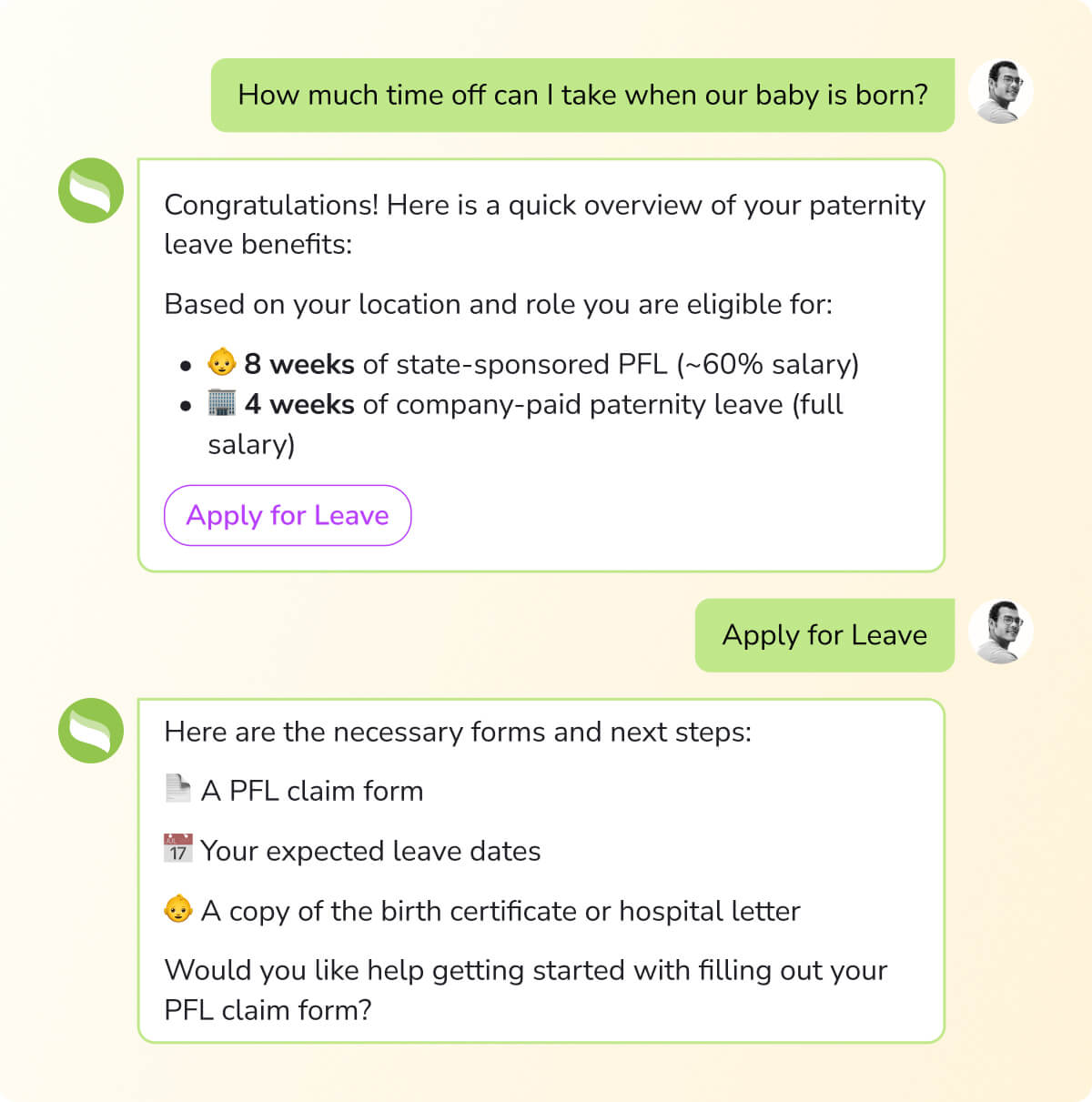
This is where Agentic AI drives the biggest efficiency gains.
- The AI Assistant (Employee Experience): Handles high-volume, routine tasks to improve service speed.
- Resolving queries: Answering common questions about PTO, healthcare, and payroll via AI assistant.
- Task support: Assisting new hires with form completion and scheduling meetings.
- Simple actions: Helping employees submit expenses or update personal info via natural language commands.
- The AI Agent (Talent & Ops): Automates complex operations to free up HR strategic time.
- Autonomous Sourcing: Screening applicant pools, ranking candidates, and generating recruiter-ready shortlists with human-on-the-loop oversight.
- Retention Monitoring: Analyzing workforce signals to detect burnout risk and suggesting interventions to leadership.
- Performance Ops: Drafting performance reviews by aggregating feedback, goals, and past interactions for manager approval.
For IT & Operations
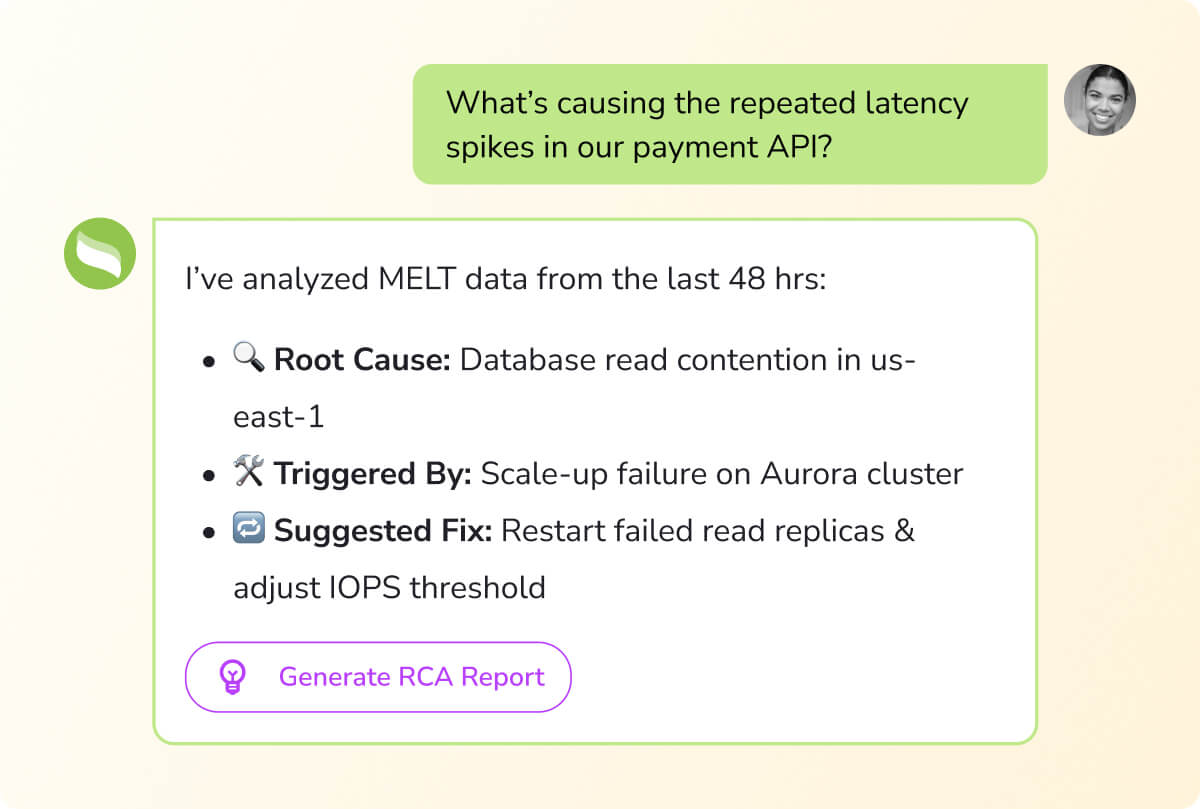
Moving from ticket deflection to autonomous remediation.
- The AI Assistant: Streamlines helpdesk interactions using Natural Language Processing (NLP).
- Auto-resolving password resets and VPN access requests.
- Suggesting knowledge articles to employees based on their user queries.
- The AI Agents: in the AIOps platform, operate at the infrastructure level.
- Predictive Maintenance: Monitoring logs to predict outages and triggering remediation workflows
(e.g., restarting services) before users are impacted. - Compliance: Continuously scanning systems for misconfigurations and auto-correcting issues
within approved boundaries.
- Predictive Maintenance: Monitoring logs to predict outages and triggering remediation workflows
For Sales & Marketing Teams
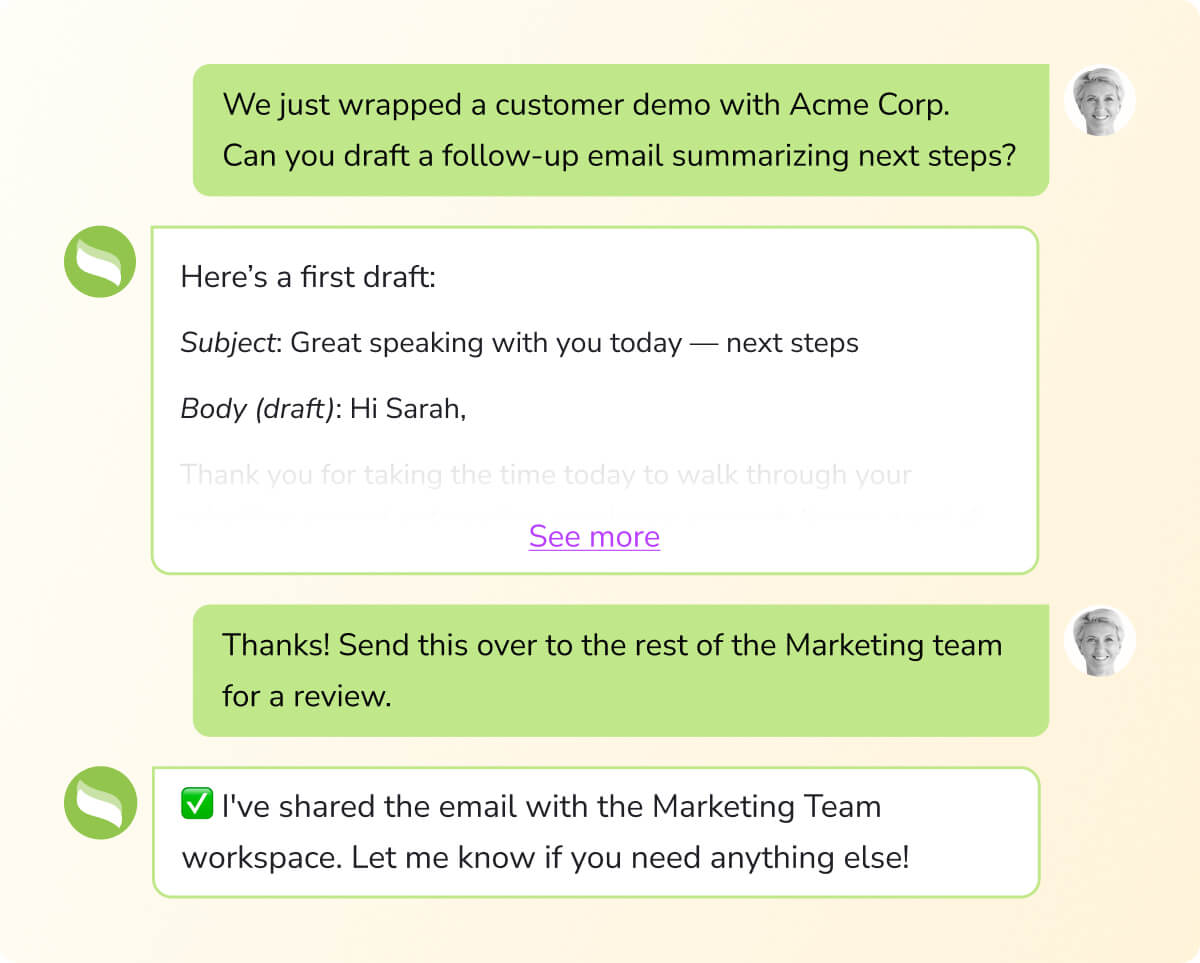
From drafting emails to managing the pipeline.
- The AI Assistant: Boosts rep productivity on repetitive tasks.
- Drafting outreach emails and updating CRM fields via user prompts.
- Providing real-time call coaching and handling scheduling meetings.
- The AI Agent: Acts as a digital teammate for marketing teams.
- Lead Research: Conducting multi-source research across LinkedIn and news outlets without human input.
- Autonomous Outreach: Generating and sending personalized sequences based on lead behavior.
- Pipeline Mgmt: Dynamically scoring leads and surfacing at-risk deals based on real-time data.
For Customer Support
From chatbots to resolution engines.
- The AI Assistant: Handles high volumes of simple requests.
- AI chatbot examples that handle order tracking and FAQs 24/7.
- Summarizing long ticket threads to help human agents catch up quickly.
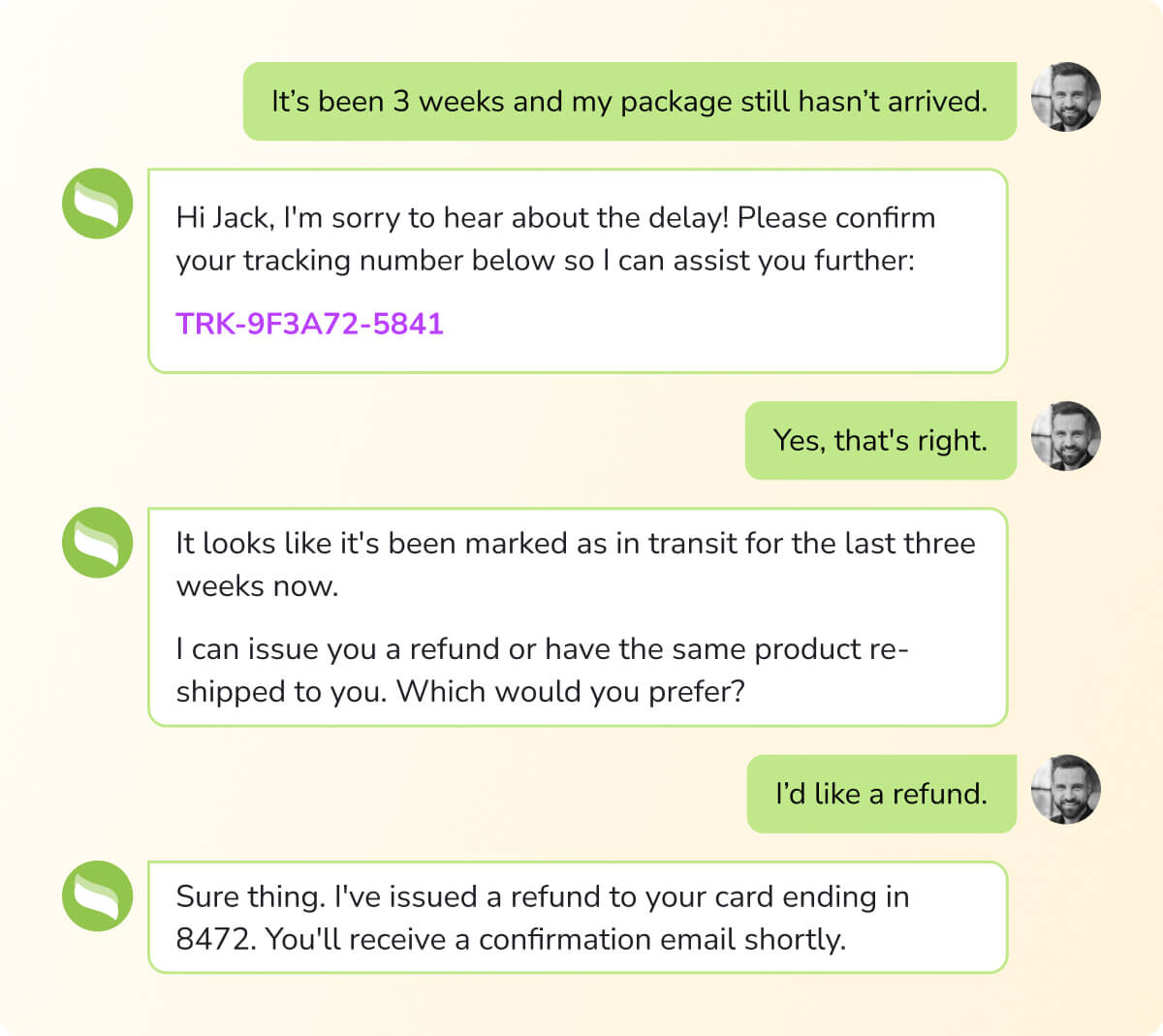
- The AI Agent: in AI customer service, Resolves complex issues.
- Predictive Triage: Analyzing voice sentiment to prioritize urgent cases.
- Autonomous Resolution: Detecting anomalies (like a lost shipment) and initiating the refund or re-shipment process
across logistics systems without needing a human to click the buttons.
Future Outlook: The Hybrid Workforce
The debate of AI Agent vs AI Assistant isn’t about choosing one over the other; it is about layering them correctly. Successful enterprises will use AI assistants to empower humans in everyday tasks, while deploying AI agents to manage complex operations in the background. As machine learning models evolve, we will see agents and AI assistants working in tandem – where a human asks an assistant to deploy a team of agents to solve a business problem.