

AIOps (AI for IT operations)
Predict major incidents and automate remediations to minimize downtime and reduce operational costs with AIOps.


















Reduce costly
downtime
Detect and prevent incidents up to 48 hours before they occur, reducing mean time to detect (MTTD) and saving millions in revenue by avoiding business-critical outages.
Accelerate ticket resolution
Automate root cause analysis and remediation to reduce mean time to resolve (MTTR) from hours to minutes, freeing IT staff to focus on strategic initiatives instead of firefighting.
Boost IT team productivity
Empower DevOps, SRE, and ITOps teams with real-time insights that consolidate data from multiple sources, reducing manual investigation and enabling them to focus on higher-value tasks.
Minimize service disruptions
with AIOps

PROACTIVE INCIDENT DETECTION & PREVENTION
Anticipate and mitigate incidents before they impact critical services. Aisera AIOps uses advanced correlation methods to analyze signals from monitoring data and incident management systems, detecting patterns or anomalies that indicate potential issues. By alerting IT early, you can reduce MTTD so teams can resolve problems before they escalate.
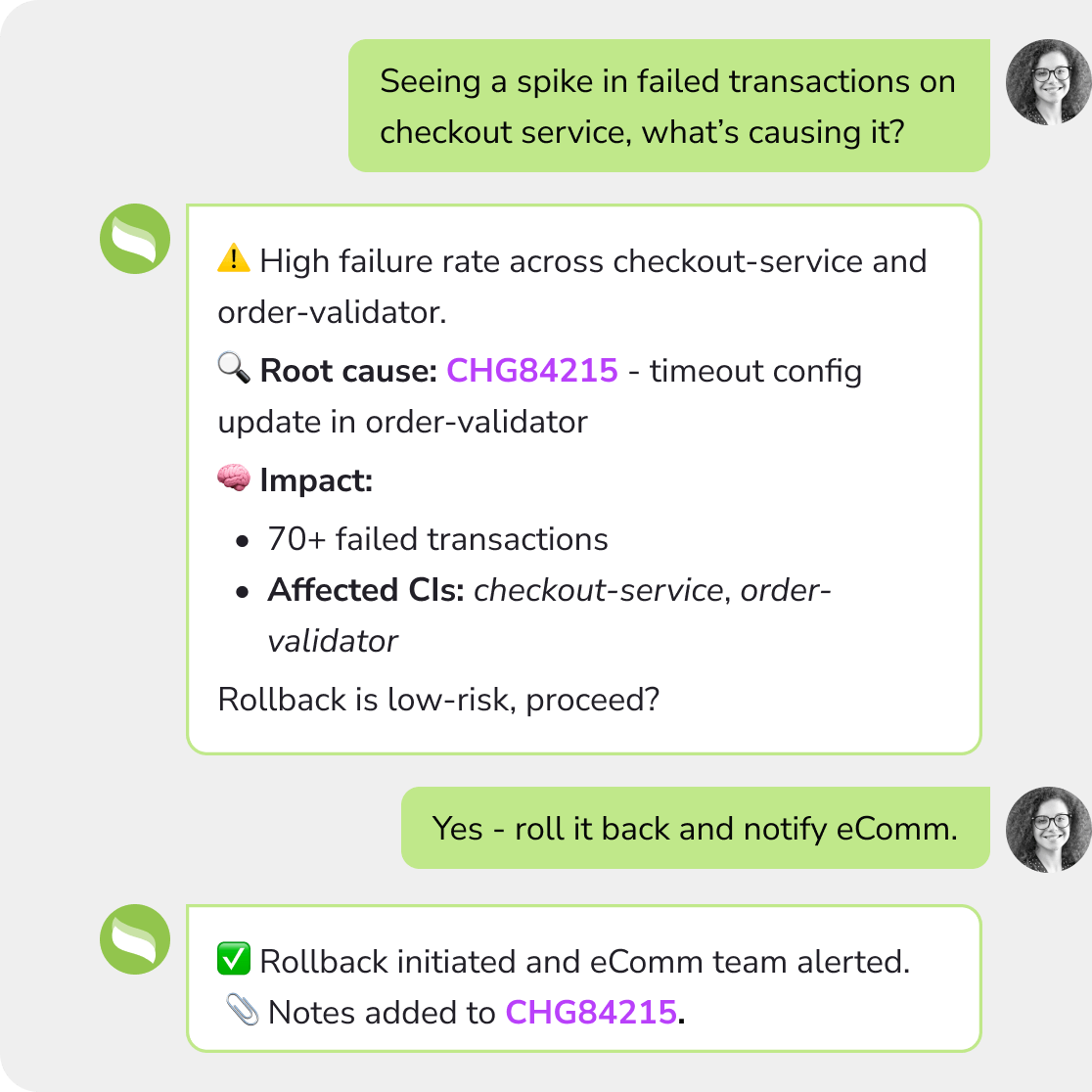
AUTOMATED IMPACT & ROOT-CAUSE DETECTION
Quickly identify and resolve issues with precision. Aisera AIOps automates impact analysis and root cause detection by correlating data from incident tickets, monitoring tools, and telemetry data collected from infrastructure, applications, and services. The system pinpoints which configuration items (CIs), users, and services are affected, reducing MTTR and ensuring rapid, targeted remediation.
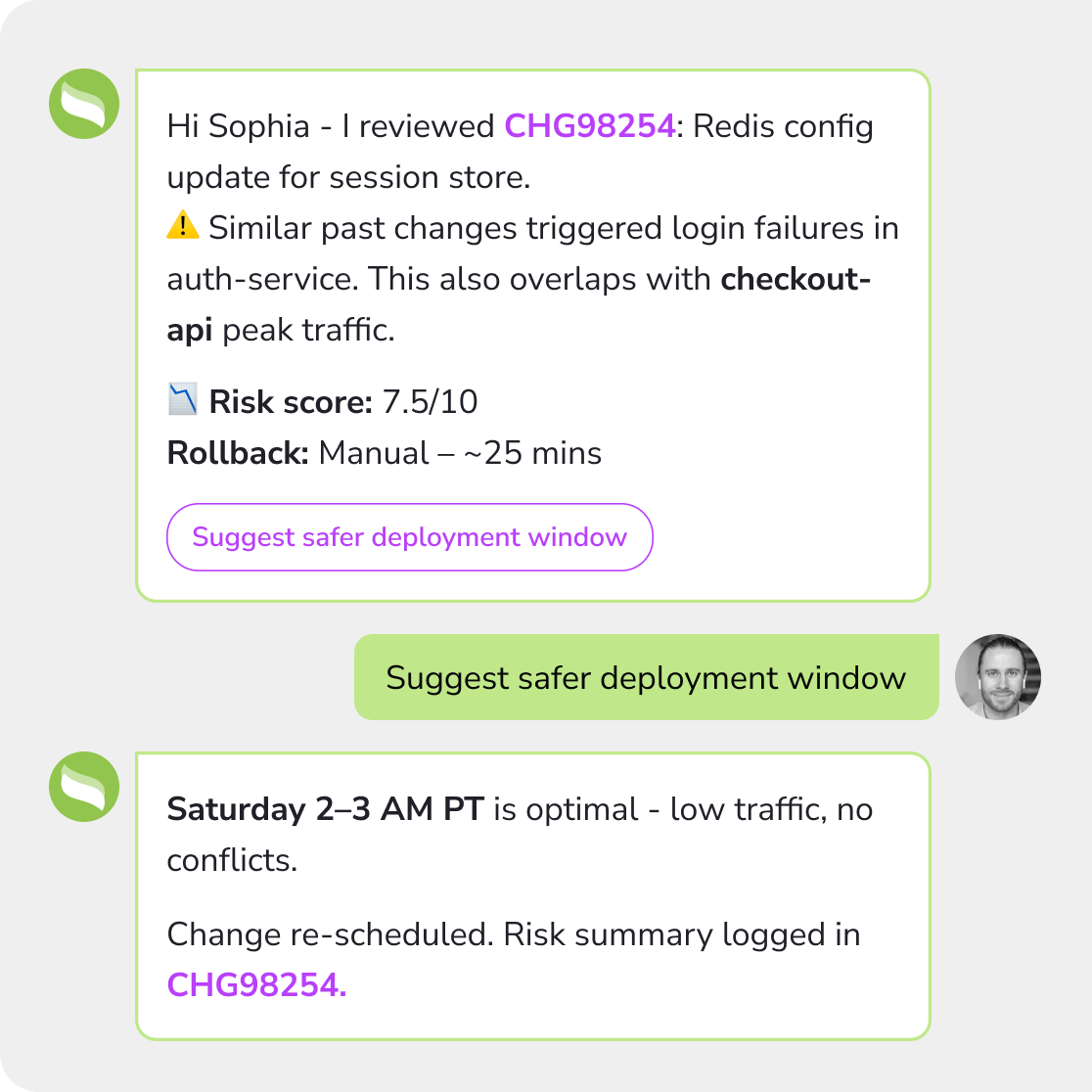
Robust change risk advisory
Ensure system-wide changes are implemented smoothly without causing disruptions or outages with the help of advanced risk assessment for proposed changes. By analyzing major historical incidents and the change data and metadata, Aisera AIOps can predict the potential impact of changes in the IT environment.

rEAL-TIME ASSISTANCE WITH AGENTIC AI
Offer real-time support with Aisera Assistant by converting technical alerts into human-readable notifications. Using natural language, IT agents can inquire about the health status, issues, and root causes of infrastructure and applications, enhancing their ability to manage IT operations efficiently.
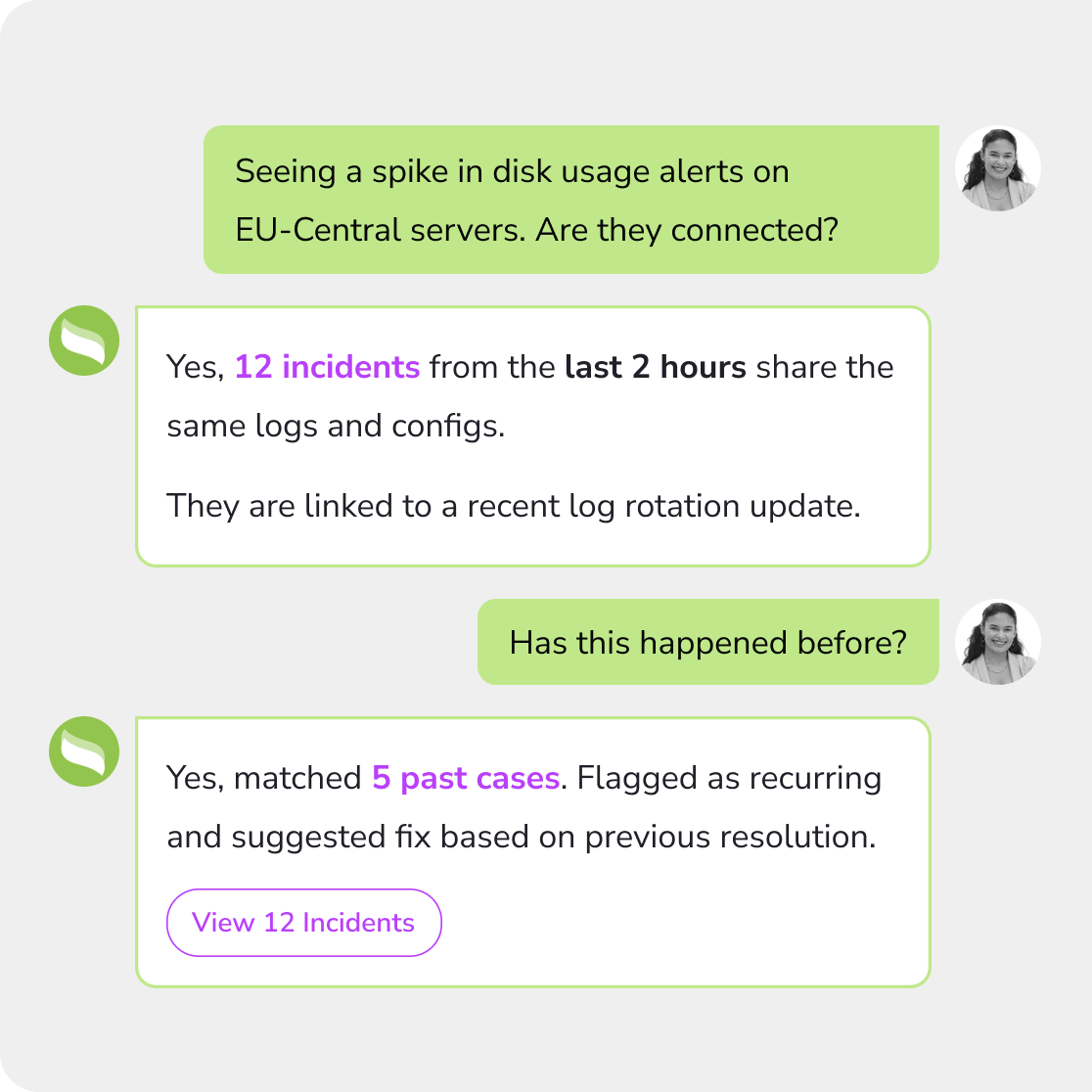
INCIDENT CLUSTERING
Reduce alert noise by up to 90% and minimize alert fatigue by analyzing logs, tickets, alerts, change requests, and more to cluster related incidents automatically. Using incident clustering, teams can also view all historical cases of a particular incident, helping them prioritize recurring issues and focus on what matters most.
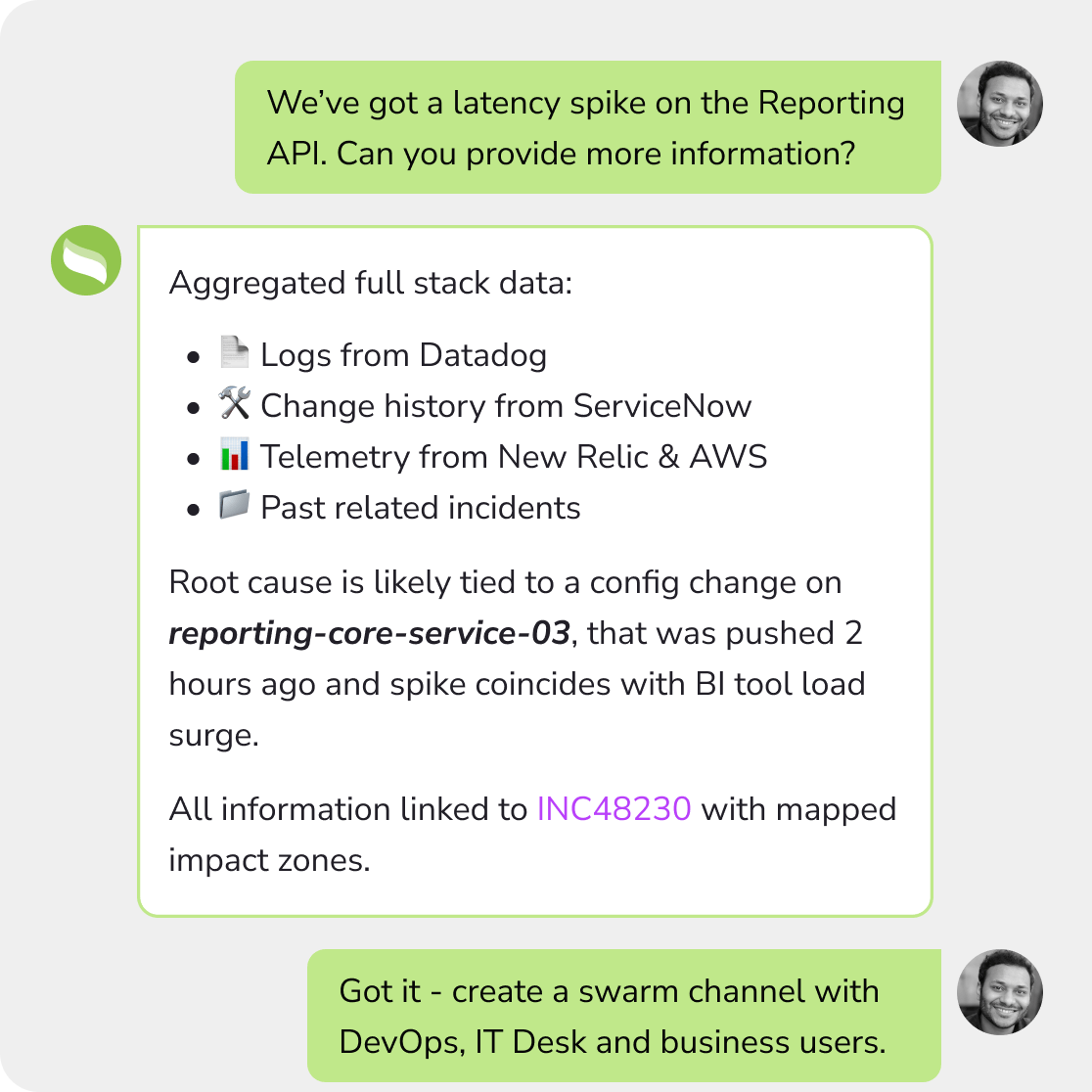
FULL-CONTEXT OPERATIONS
Break operational silos and add context to deliver all the information teams need for better incident analysis and resolution. With enrichment, relevant data from across tools and systems is automatically added, giving IT teams a unified view that drives faster root cause identification and efficient remediation.
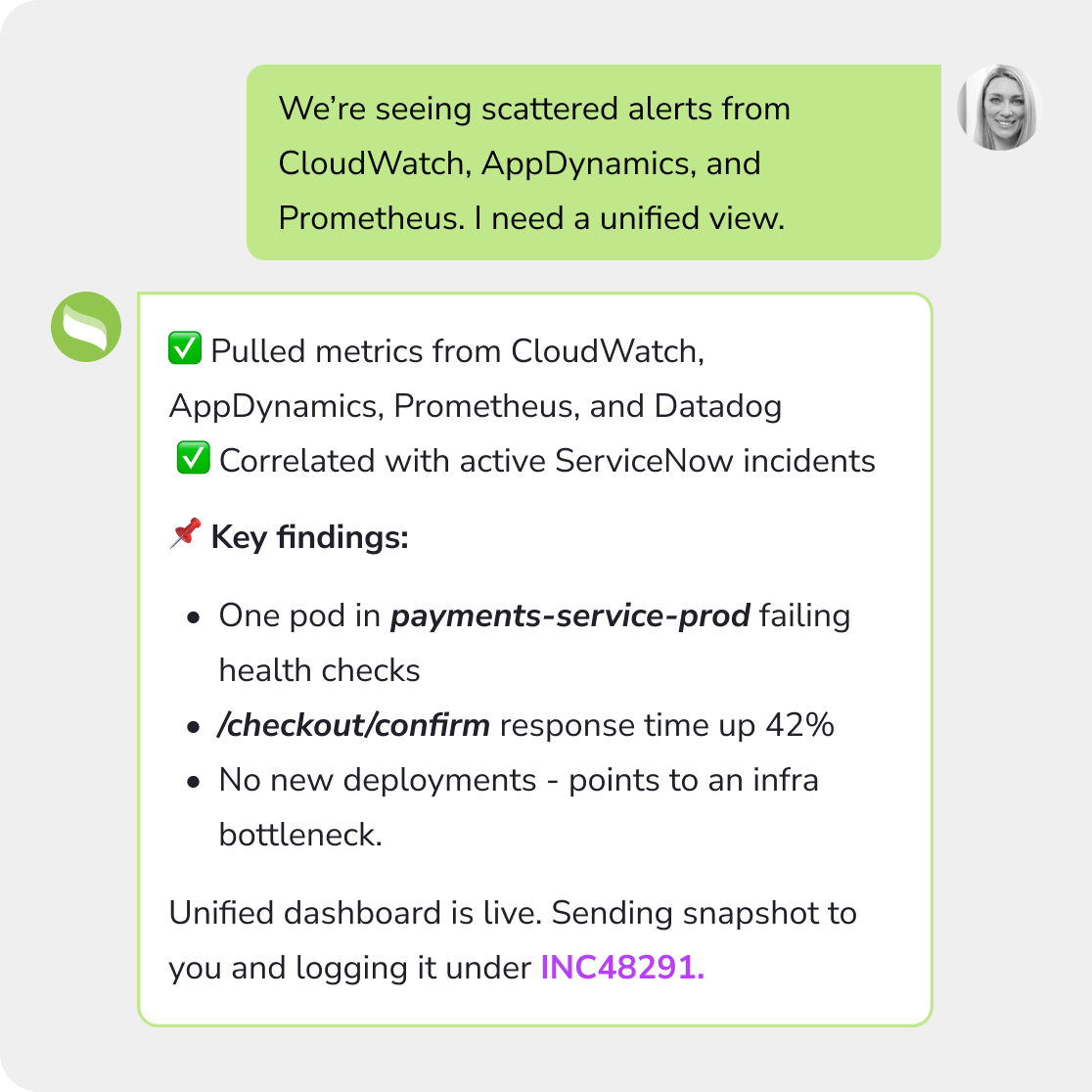
UNIFIED VISIBILITY
Standardize fragmented data and create a holistic view of your tech stack by integrating various monitoring tools to achieve full-stack visibility for business, cloud, and IT operations. This will facilitate better decision-making and faster response times for DevOps, SRE, and ITOps teams.
Full-stack AIOps
AI Observability
Minimize disruptions with early incident detection, accurate root cause analysis, and automated remediation.
Learn More
AI Discovery
Boost efficiency by replacing manual network crawls with a dynamic service map and up-to-date CMDB.
Learn More
See Aisera’s AI Agents in action
for IT Opeations
Demo
Proactive incident detection
Demo
Ticket clustering for outages
Demo
CMDB configuration detection
AIOps FAQs
What is an AIOps platform?
An AIOps platform is an AI-powered system that automates and enhances IT operations by using machine learning, analytics, and automation to manage events, incidents, logs, and infrastructure performance. It analyzes large volumes of operational data to detect patterns, identify root causes, and predict issues before they impact end users. AIOps helps organizations move from reactive IT operations to proactive, self-healing, and autonomous operations.
What are the key functions of an AIOps platform?
AIOps platforms ingest and analyze data from logs, metrics, events, traces, and alerts across IT systems. They correlate signals, reduce noise, detect anomalies, and identify the most likely root cause of incidents. Additionally, AIOps platforms automate remediation workflows, generate insights for capacity planning, and provide real-time visibility into system health. Many also integrate with ITSM systems to automatically create, update, and resolve tickets.
What are the key benefits of AIOps platforms?
AIOps platforms significantly reduce operational noise by filtering out irrelevant alerts and correlating related events into a single actionable incident. They accelerate mean time to detect (MTTD) and mean time to resolve (MTTR) by providing predictive alerts and automated remediation. AIOps also improves service uptime, optimizes resource utilization, lowers operational costs, and helps IT teams scale without adding more headcount. Ultimately, it increases reliability and stability across complex hybrid and multi-cloud environments.
What are the key components of Aisera’s AIOps platform?
Aisera’s AIOps platform includes AI-powered event correlation that clusters and reduces noise across monitoring tools, helping teams identify the true root cause faster. It provides predictive analytics and anomaly detection, enabling early identification of issues before they escalate into outages. Aisera also includes automated remediation through workflow orchestration and integrations across IT systems, allowing repetitive tasks to be executed autonomously.
Additionally, Aisera’s platform leverages domain-specific LLMs, knowledge graphs, and contextual intelligence to deliver more accurate insights, and integrates natively with ITSM platforms like ServiceNow, Jira, and BMC to close the loop from detection to resolution. This makes Aisera’s AIOps system capable of driving high levels of automation and supporting autonomous IT operations.