

AI-driven analytics & actionable insights
Get a bird’s-eye view into the performance of your AI agents with customizable dashboards and automated reports for continuous improvement.
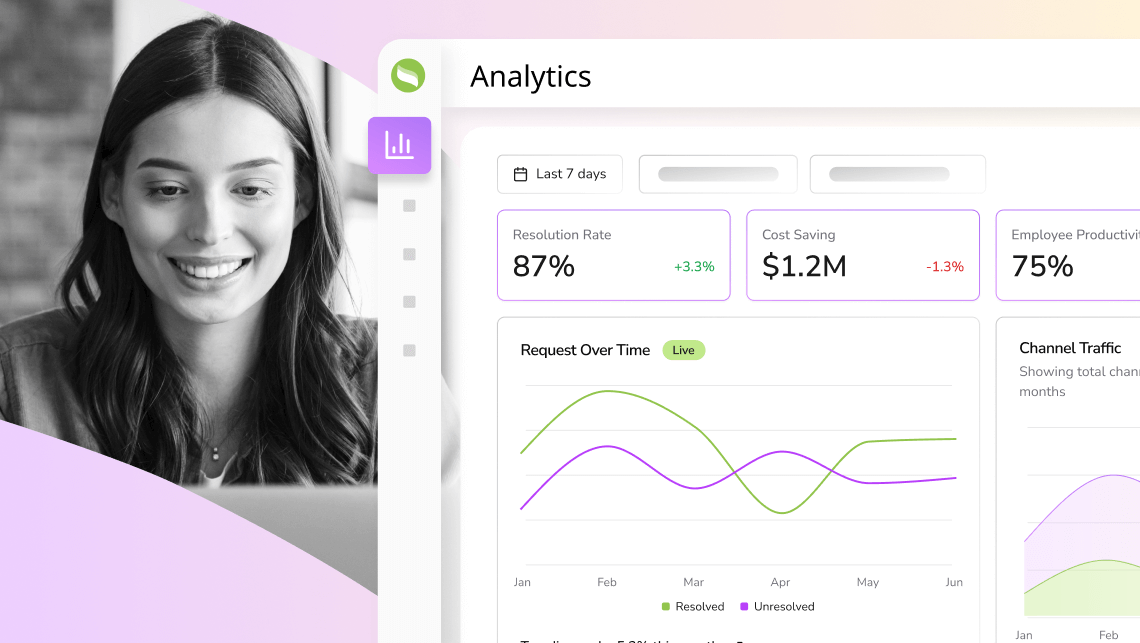




















Gain actionable insights in seconds
Get real-time visibility into the performance of your AI agents, revealing unique, customer-specific insights that drive superior outcomes.

Continuous optimization
Anticipate trends and identify patterns to fine-tune agent behaviors, personalize interactions, and improve efficiency. This will ensure that the platform evolves and adapts to meet changing customer and business needs.

Realize greater ROI from your AI investments
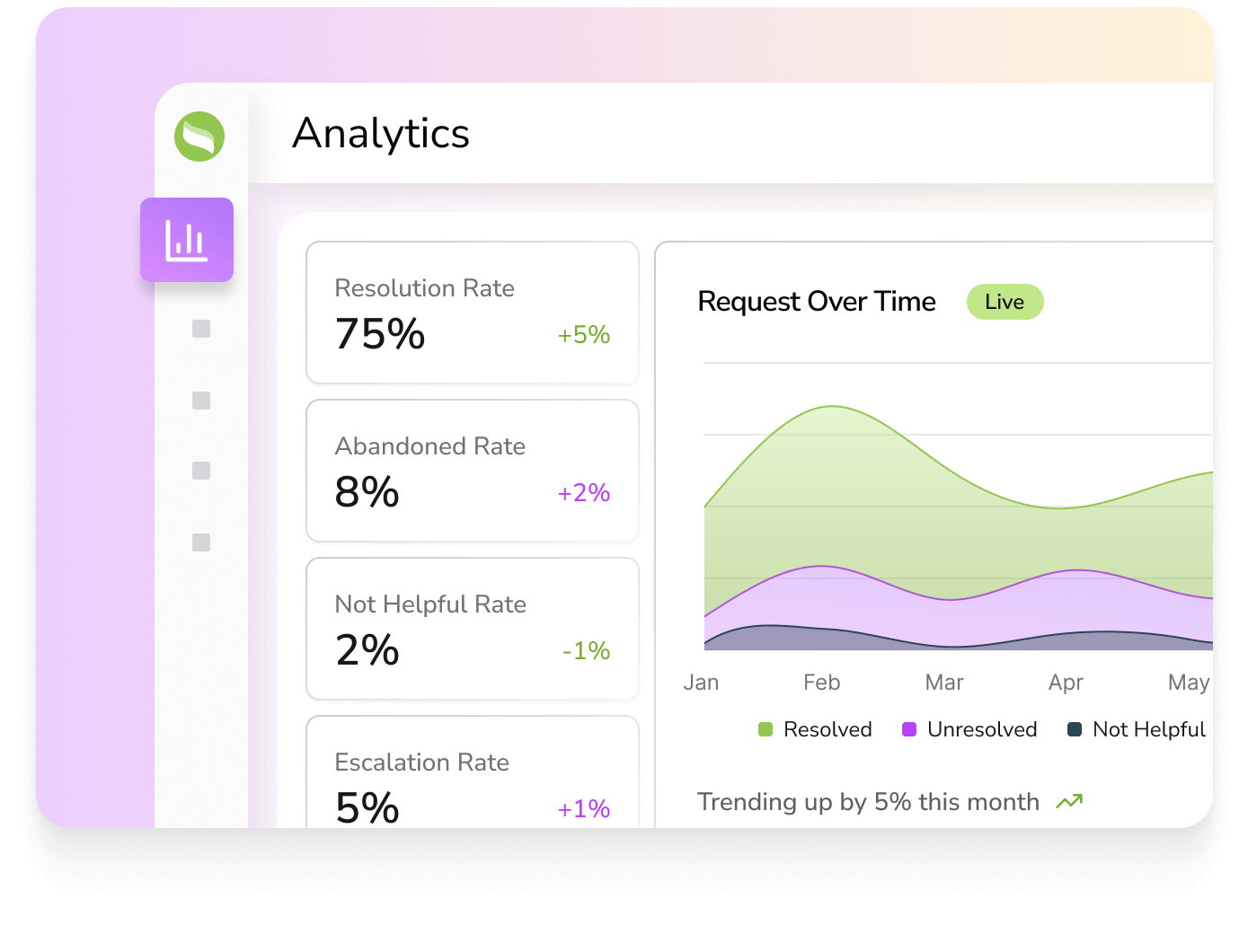
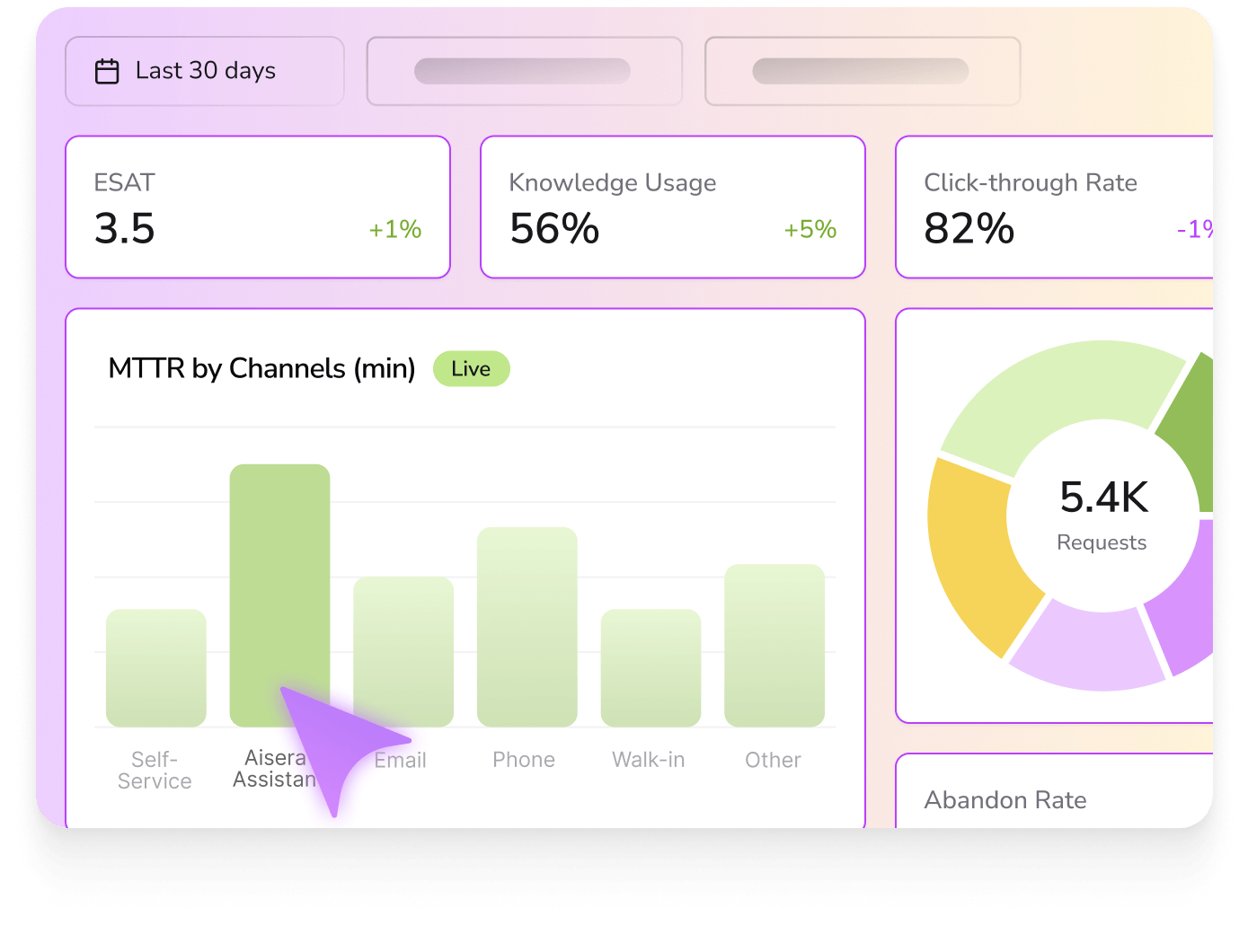
Measure KPIs, track outcomes, and analyze agent performance to demonstrate clear value, maximize business impact, reduce costs, and improve service delivery.
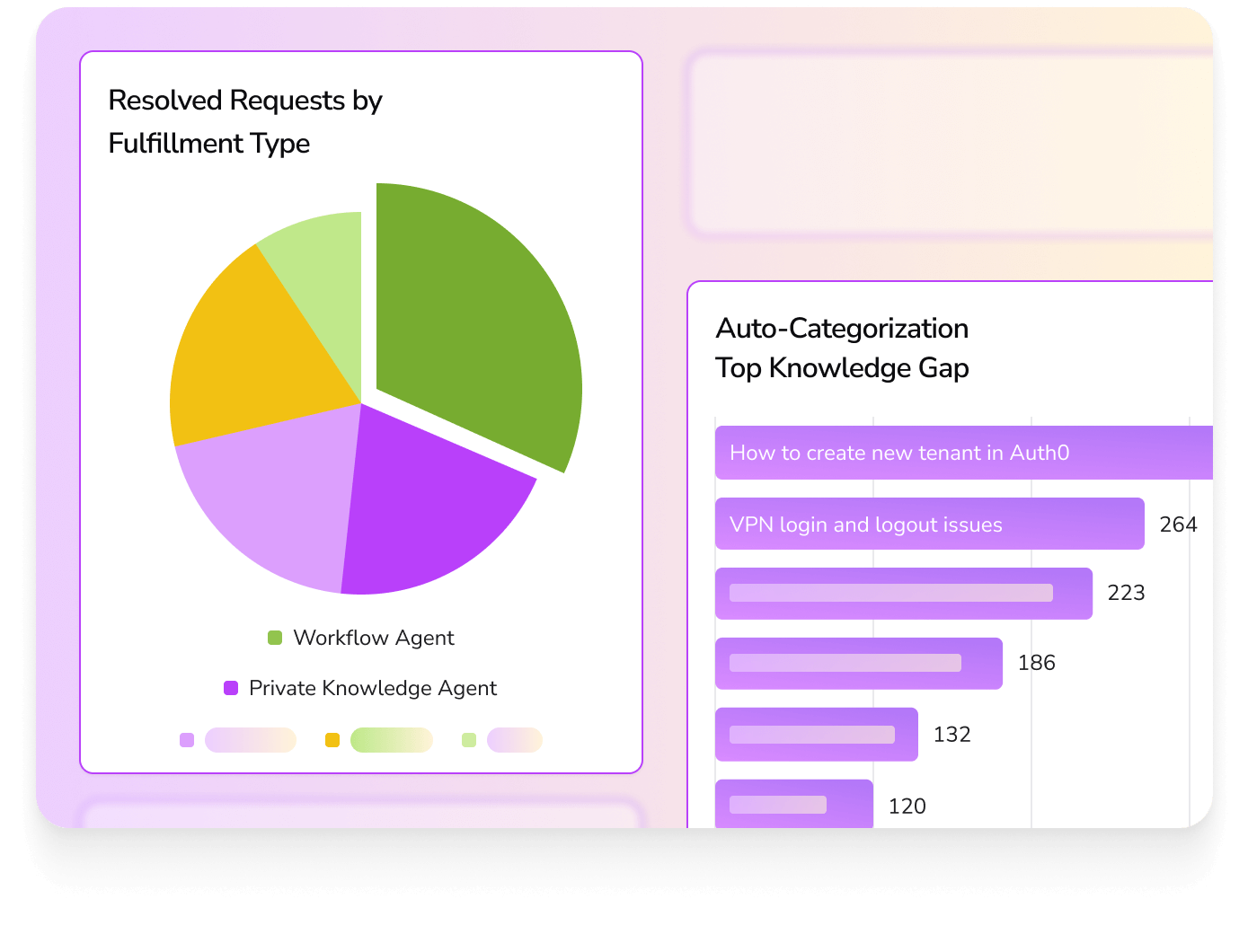
Surface complex organizational data
& turn it into strategic insights

AI-driven Analytics FAQs
What are AI-driven analytics?
AI-driven analytics refers to the use of artificial intelligence – such as machine learning, natural language processing, and predictive algorithms – to analyze data, identify patterns, and generate insights automatically. Unlike traditional analytics that require predefined rules and manual data exploration, AI-driven analytics can learn from historical data and adapt over time. This enables faster, more accurate, and more contextual insights that help organizations make smarter decisions.
How do AI-driven analytics differ from traditional analytics?
Traditional analytics relies on structured data, manual querying, dashboards, and user-defined logic. In contrast, AI-driven analytics can analyze both structured and unstructured data, automatically detect trends, and generate insights without requiring a human analyst to specify every rule. AI also enables predictive and prescriptive insights – forecasting what may happen next and recommending what actions to take – whereas traditional analytics typically focuses on reporting historical performance.
What are the key benefits of AI-driven analytics?
The biggest benefit is speed and automation, as AI can analyze massive datasets instantly and surface insights without manual effort. AI-driven analytics also improves accuracy and decision-making by uncovering patterns or anomalies that humans may overlook. Additionally, AI enables predictive forecasts, real-time insights, and continuous learning, helping businesses optimize operations, reduce costs, and proactively address risks.
What are real-world applications of AI analytics?
AI analytics is widely used across industries for tasks such as customer sentiment analysis, fraud detection, IT incident prediction, HR attrition forecasting, financial risk modeling, and personalized product recommendations. In customer service, AI analytics identifies trending issues, root causes, and workflow bottlenecks. In IT and operations, it helps detect outages early, optimize resource allocation, and monitor system performance in real time.