
AI Agent Orchestration

Enable an AI-first cognitive organization that delivers exceptional
service experience and productivity gains

End-to-End AI Agent Orchestration

Leverage Aisera’s AI Agent orchestration engine to create a cognitive experience that enables proactive actions and human-like conversations. Orchestrate domain-specific AI agents to resolve tasks across the enterprise, reduce costs and latency with LLM Gateway, and ensure responsible agentic AI deployment with Aisera’s TRAPS framework.

Empower your organization with robust agentic capabilities that elevate employee productivity and customer satisfaction, delivering exceptional, seamless experiences.
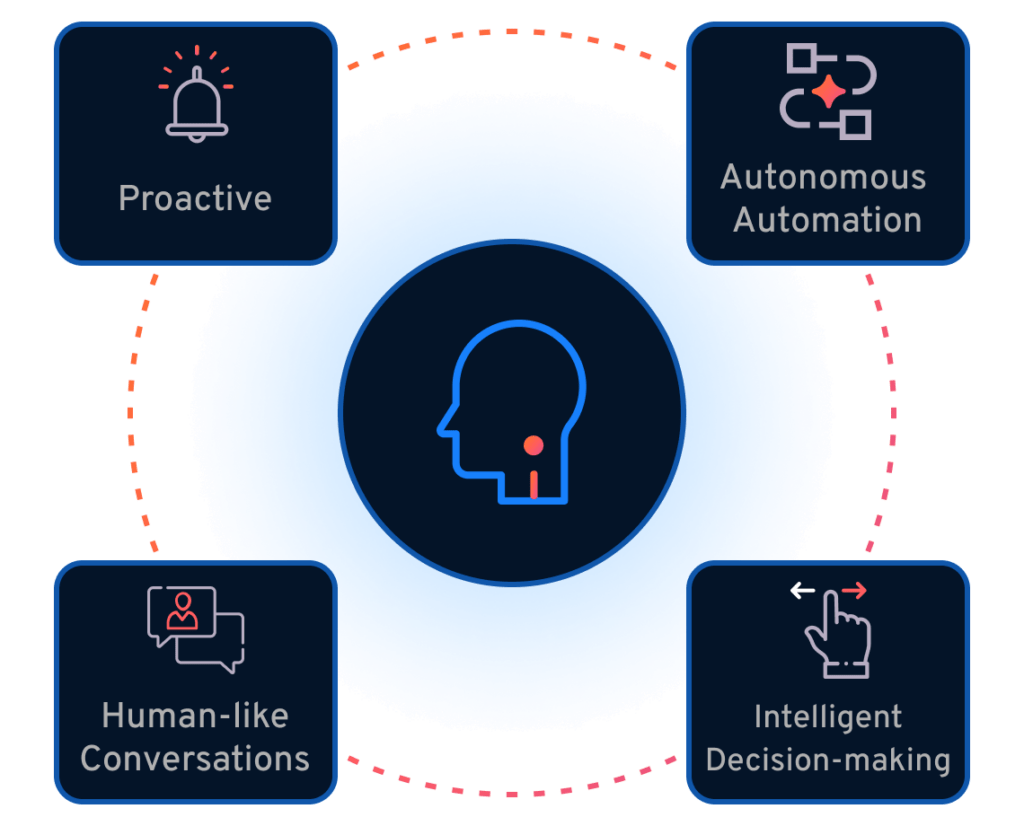
End-to-End AI Agent Orchestration

Intentless Orchestration

Provide human-like conversation that is personalized and context-aware without having to maintain traditional dialog flows with intentless agentic orchestration. Understand user requests with the agentic AI reasoning and context disambiguation engines and execute the appropriate fulfillment with the dynamic fulfillment engine. Using the built-in response verification engine, the AI agent eliminates hallucinations to ensure that users receive accurate answers and resolutions.
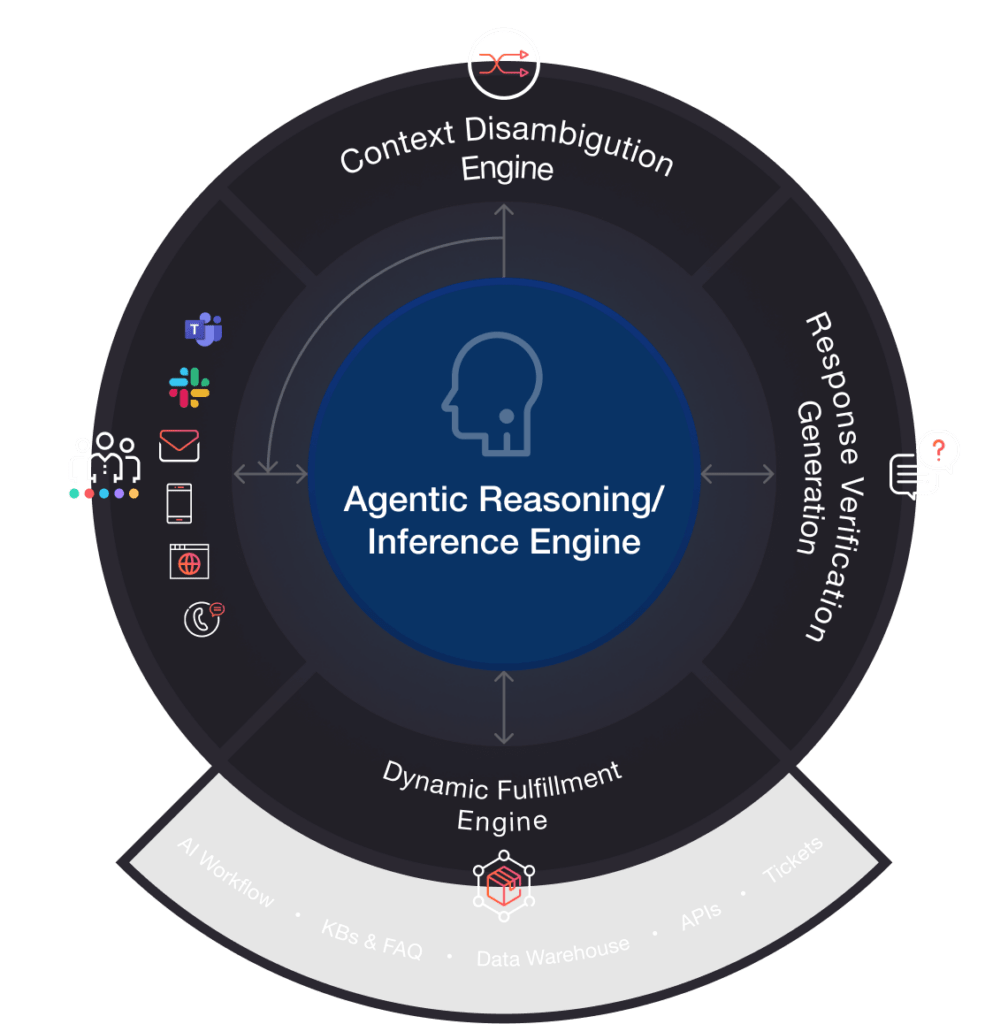
Intentless Orchestration

Universal Orchestration

Create domain-specific agents and orchestrate between them with universal AI agent orchestration. Federate bot development among multiple providers while maintaining governance and control.
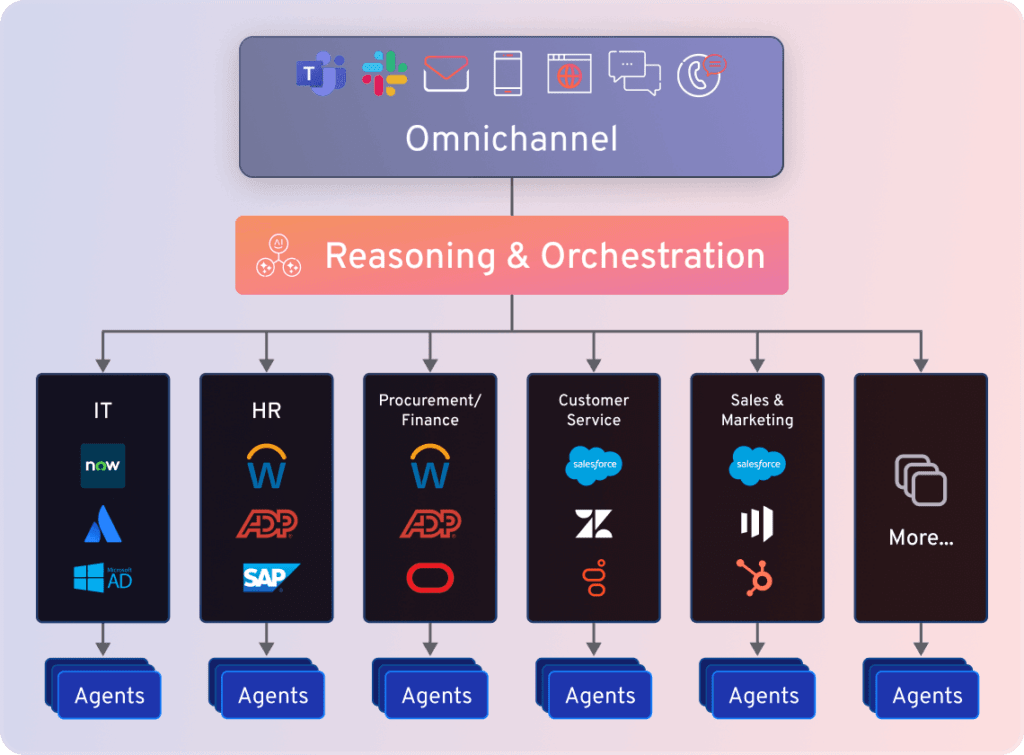
Universal Orchestration

LLM Gateway Orchestration

Automatically leverage the optimal foundational AI models for real-time and batch processing tasks, ensuring minimal latency and cost-efficiency while enhancing overall accuracy and user experience. Safeguard your applications, models, and data with robust security protocols, preventing unauthorized access and ensuring compliance. Additionally, LLM gateway guarantees the responsible and secure use of AI by implementing comprehensive governance controls, enabling full auditability and providing clear visibility into AI consumption and performance.
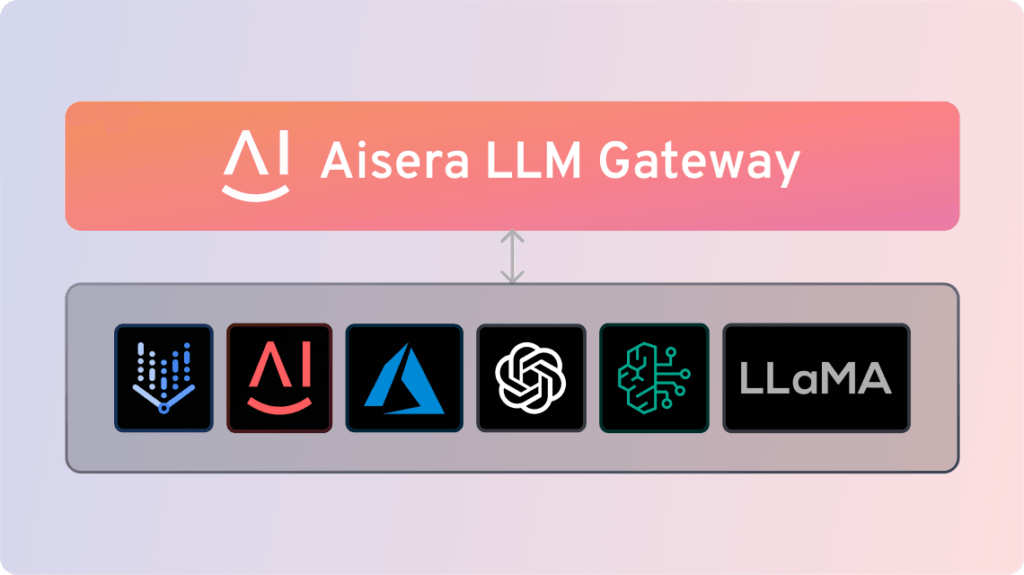
LLM Gateway Orchestration

Responsible Agentic AI with Aisera’s TRAPS Framework

Build your AI solution the right way. Aisera’s TRAPS Framework enforces rigorous ethical and secure methodologies in designing and deploying AI Agents. With AI that is trusted, responsible, auditable, private, and secure, Aisera accelerates the time-to-value of Generative AI while minimizing potential risks.
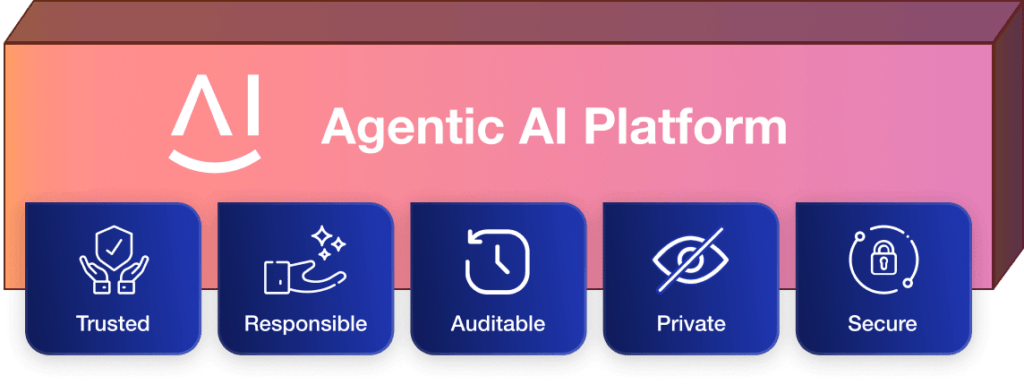
Responsible Agentic AI with Aisera’s TRAPS Framework

FAQs on AI Agent Orchestration

How does AI agent orchestration work?

AI agent orchestration works by coordinating system of agents, tools, and workflows so they can collaborate to complete complex tasks end-to-end. Instead of relying on a single model, an orchestrator routes the user’s request to the right agent, ensures each step runs in the correct sequence, and manages dependencies across systems. It also monitors agent outputs, handles errors, and decides when to call external APIs, tools, or human assistance - ensuring reliable and efficient task execution.

What are the key benefits of AI agent orchestration?

The biggest benefit of AI agent orchestration is that it enables scalable, repeatable, and consistent automation across business processes. By coordinating multiple agents, organizations can automate complex workflows that a single LLM cannot handle alone, such as multi-step approvals, system updates, or cross-application actions. Orchestration also increases reliability, reduces operational drag, and ensures that AI-driven processes follow governance, security, and compliance rules.

What are the key components of an AI agent orchestrator?

An AI agent orchestrator typically includes a controller that decides how tasks are routed, a workflow engine that defines the sequence of steps, and a tool or API layer that enables agents to interact with external systems. It also includes context management, which preserves state and ensures agents have the information they need at each step. Additionally, it incorporates guardrails, monitoring, and error handling to enforce safety, auditability, and consistent execution across all agents.

What are the main types of orchestration patterns?

The main orchestration patterns include sequential orchestration, where tasks are executed in a defined order; parallel orchestration, where multiple actions run at the same time to speed up processing; and conditional orchestration, where the workflow branches based on rules or agent outputs. Another pattern is hierarchical orchestration, where a master agent delegates work to specialized sub-agents. These patterns allow organizations to design flexible, scalable AI automations that match different business workflows and complexity levels.